I hope everyone had a wonderful Thanksgiving. I just returned from my sister’s place and I’m probably going to make a midnight snack of the pumpkin pie she gave me. As always, I’m grateful to all of you who continue to read the blog. I’ve become a better writer and thinker due in no small part to the obligation I feel to keep things interesting for my readers. Your comments and e-mails mean a great deal to me and I never stop feeling fortunate to have a regular audience for my assorted musings.
I’ve been neglecting my BBC blogging duties, so I just posted an entry in which I poke fun at a representative of the mainstream media. Regular blogging will resume here tomorrow.
I caught Jeff Bezos, founder of Amazon.com, on Charlie Rose last night (in the wake of the writers’ strike, Rose has replaced my nightly dose of Letterman before bed). He was pitching Kindle, Amazon’s new e-book reader. The device has received mixed reviews in the gadget press, but one thing keeps bugging me. People with disabilities are a natural consumer market for e-book readers, but Amazon and other hardware manufacturers have shown zero interest in even exploring the needs of readers with disabilities. I recognize that these companies are in business to make a profit and I’m not expecting them to cater to a niche population, but I don’t think I’m asking for the moon, either. Lots of really brilliant people are working on these readers and I’m fairly certain they can figure out how to include switch access, voice recognition, or text-to-speech capabilities. And, as with most accessible technologies, the average consumer might find them useful as well.
Sooner or later, a reading device will come along that has universal design elements built into it and I’ll eagerly give that company my hard-earned cash. The wait is getting frustrating, though.
Today’s edition of All Things Considered features an interview with Dan Habib, the creator of a documentary about his son Samuel, who has cerebral palsy. I blogged about Samuel a few weeks ago. The host followed up that story with another piece discussing the inclusion of kids with disabilities in our public schools. To summarize the facts from the story, only half of all kids with disabilities are fully included in “regular” classrooms and only eleven percent of kids with intellectual disabilities are included in regular classrooms. As with so many aspects of a kid’s life with a disability, geography plays a critical role. Some states and school districts do a substantially better job of promoting inclusion than others. And yes, I was a beneficiary of the inclusion philosophy during most of my years in school.
A Norwegian artist has founded a beauty contest for women who have lost limbs to landmines. The contest, known as Miss Landmine Angola 2008, champions itself as a vehicle for “female” and “disabled” pride and empowerment. The concept strikes me as gimmicky and vaguely exploitative, but that could just be me. There must be ways to bring the consequences of landmine deployment to the public’s attention that aren’t quite so cheesy.
Thanks to BoingBoing for the tip.
The sight of Angelina Jolie’s curvaceous and digitized naked form emerging from a murky pool will probably never rival other touchstones of geek iconography like, say, Princess Leia in her golden bikini. But you can bet your entire collection of action figures that that particular scene from Beowulf, Robert Zemeckis’ retelling of the the old-school epic poem, will be replayed frame-by-frame on the DVD players of adolescent boys (and probably a substantial number of girls) for years to come.
As a story, the film works just fine. Screenwriter Neil Gaiman has taken a few liberties with the original, but it’s still a satisfying tale of a flawed hero batting demons both literal and metaphorical. As an example of motion-capture technology’s ability to mimic real-life actors, the film is less successful. The uncanny valley effect here is perhaps less noticeable than in previous films of this type, but I still couldn’t shake the feeling that I was watching a very long cutscene from a video game. I have no doubt that digitally-rendered human actors (a different breed than the Gollums and anthropomorphized bees of the cinematic world) will eventually achieve the realism filmmakers are seeking, but Beowulf reminds us that we’re not quite there yet.
However, the technology is quite capable of giving realism to Angelina Jolie’s ass. My goodness.

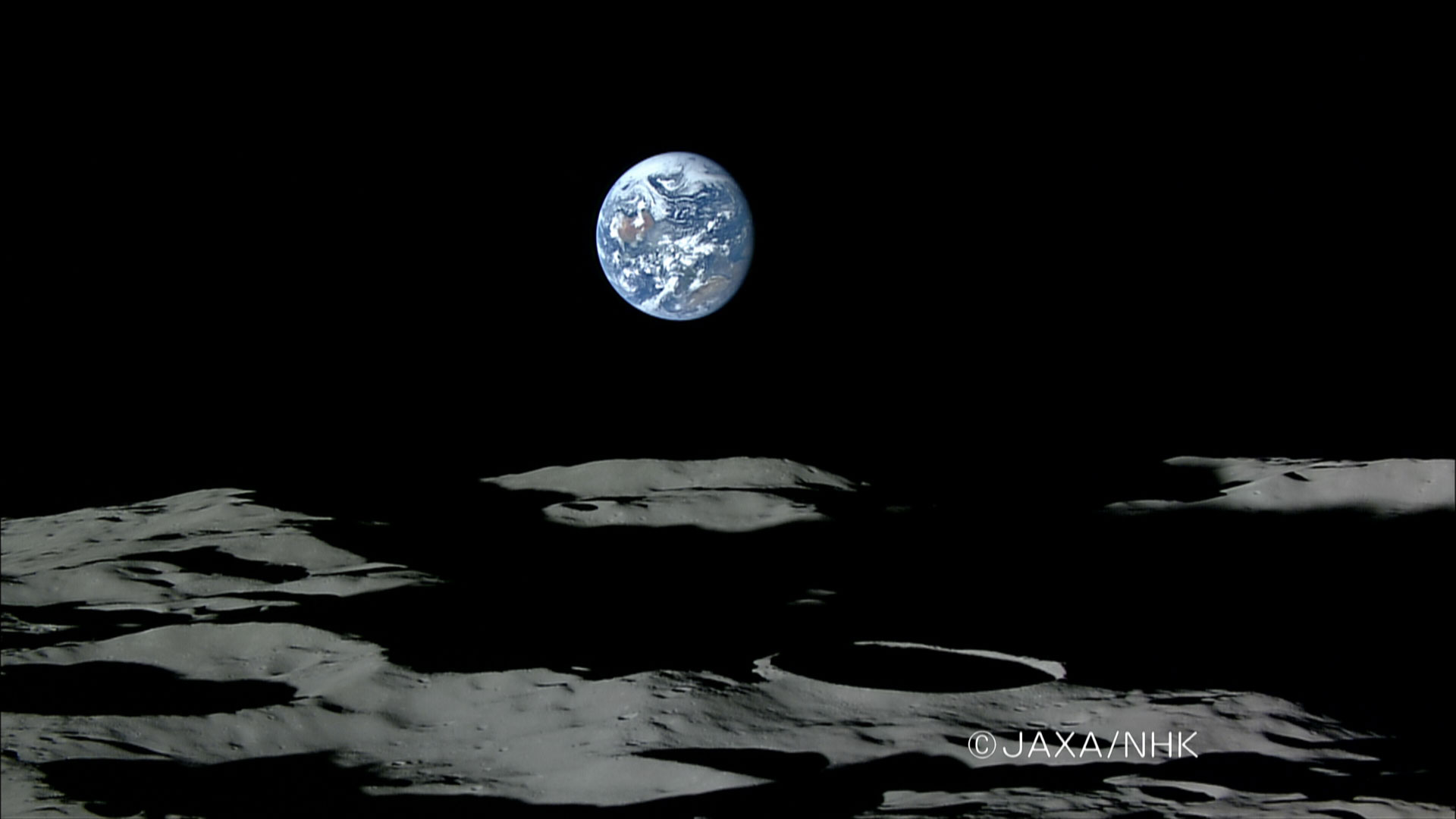
It’s Friday night. You’ve had a long week. To help you keep things in perspective, here’s a high-definition picture of the Earth taken by a Japanese satellite orbiting the Moon.
I don’t agree with Governor Pawlenty’s positions on a range of issues, but he deserves credit for pushing policies that safeguard the environment. Earlier this year, he signed landmark legislation that will require Minnesota to produce 25% of its energy from renewable resources by 2025. Today, he and eight other Midwestern governors signed a pact to create a cap-and-trade system to reduce greenhouse gas emissions. The states’ respective legislatures will still need to give the plan their imprimatur, but this agreement represents a significant first step towards an eventual nationwide strategy for reducing emissions. I’m not sure what influenced Pawlenty to resist the environmental rape-and-pillage mentality of his party, but I’m happy to see him offer some real leadership on the matter.
Now, if only he’d buck up and pass a gas tax increase so that we can fix our roads, bridges, and build ourselves a real transit system.
The BBC reports that scientists are able to interpret the speech signals in the brain of a paralyzed man who is unable to speak. This could eventually lead to assistive communication devices that can be controlled via thought. It could also lead to devices that can expose your private thoughts for the whole world to laugh at, but let’s try to stay positive about these things.
While I was putting together the links for yesterday’s post on homeless veterans, I stumbled across another NPR story offering a survey of must-read books of the science fiction and fantasy persuasions. Nancy Pearl, the Seattle librarian who serves as NPR’s resident book reviewer, claims that she isn’t a “fanatic” for sf/fantasy, but the title she chooses to highlight reveal a connoisseur’s appreciation for the two genres. Pearl earns my instant respect with her inclusion of Gateway and and The Forever War, two books for which I’ve held a deep fondness since I read them in college. And her praise of The Name of the Wind is sufficiently intriguing for me to add the book to my Amazon wishlist. She also lavishes praise on Cryptonomicon, a doorstop of a book that has been sitting on my shelf for the better part of a decade and one that I really should get around to in the near future.